

Sustainability for SMEs in the UK: How Small Businesses Can Save Money and Help the Environment

Sustainability for SMEs in the UK: How Small Businesses Can Save Money and Help the Environment

Sustainability is no longer a trend or a luxury for big corporations – it’s becoming a vital part of running a successful business, regardless of size. For small and medium-sized enterprises (SMEs) in the UK, adopting sustainable practices can seem daunting, but it doesn’t have to be. By making small changes, you can reduce costs, increase efficiency, and improve your reputation, all while doing your part for the planet.

At A&C Chartered Accountants, we’re passionate about helping SMEs like yours embrace sustainability in a way that makes financial sense. In this blog, we’ll show you how sustainability can boost your bottom line and offer practical steps you can take to get started.

Why Sustainability Matters for UK SMEs

In today’s business environment, sustainability is more than just a nice-to-have. Consumers are more environmentally conscious than ever, with many choosing to support businesses that align with their values. In fact, a survey by Deloitte found that 32% of UK consumers are highly engaged with adopting a more sustainable lifestyle, and 61% have cut back on single-use plastics. This shift in consumer behaviour is a big opportunity for SMEs to stand out in a competitive market.

Beyond customer appeal, sustainability can also improve your business operations. Simple actions like reducing energy use or sourcing locally can lower costs. Plus, government incentives such as tax reliefs for energy-efficient equipment make going green even more attractive for SMEs.

So, how can you start building sustainability into your business model?

1. Reduce Energy Costs by Boosting Efficiency

Energy efficiency is one of the quickest and easiest ways to cut costs while reducing your carbon footprint. Simple steps like switching to LED lighting, reducing paper use, and installing smart meters to monitor energy consumption can make a big difference. Smart meters not only help you track energy usage but can also highlight where you’re wasting energy, allowing you to take targeted action.

Bonus Tip: Access Green Tax Relief

The UK government offers tax reliefs to businesses that invest in energy-saving technologies through the Enhanced Capital Allowance (ECA) scheme. This means that your SME could claim 100% of the cost of eligible equipment against taxable profits in the first year. At A&C Chartered Accountants, we can help you identify qualifying purchases and make the most of this scheme.

2. Partner with Sustainable Suppliers

Your business is only as sustainable as the supply chain it relies on. One of the best ways to lower your environmental impact is to work with local, sustainable suppliers. By reducing transportation distances and sourcing eco-friendly materials, you’ll not only reduce carbon emissions but also enhance your brand’s green credentials in the eyes of your customers.

Bonus Tip: The Power of Local

Supporting local businesses doesn’t just help the environment – it also fosters community relationships, often leading to long-term partnerships and potentially better deals. It’s a win-win for your business and the planet.

3. Minimise Waste and Maximise Profits

Waste reduction isn’t just about being eco-friendly – it can also be a great way to boost your profits. Many UK businesses are now finding innovative ways to recycle, repurpose, or even sell materials they would have previously thrown away. This not only reduces waste disposal costs but can also open up new revenue streams.

At A&C Chartered Accountants, we help SMEs explore ways to reduce waste and turn it into profit. Whether it’s reviewing your current processes or finding suppliers who can reuse your waste materials, we can provide the financial guidance to help you make it work.

4. Sustainable Financial Management

To truly embed sustainability into your business, it’s important to track the financial impact of your efforts. Sustainable financial management involves regularly reviewing your operations to ensure that they are both environmentally and financially sustainable. This could include anything from reducing unnecessary spending on energy to setting up an efficient payroll system that minimises paper usage.

Our sustainability accounting services at A&C Chartered Accountants can help you measure the financial benefits of your sustainable practices. We’ll guide you in making informed decisions that not only reduce your carbon footprint but also improve your profitability.

5. Embrace Digital Transformation

Going paperless is one of the easiest and most impactful steps a small business can take to reduce its environmental impact. By adopting cloud-based accounting software like Xero, you can manage your finances efficiently while eliminating the need for paper-based records. At A&C Chartered Accountants, we’re proud to have achieved Xero Platinum status, and we can guide you through the process of digitising your accounting, payroll, and other financial processes.

Cloud solutions not only help you cut down on waste but also improve collaboration, allow real-time financial tracking, and give you access to valuable insights that can drive better decision-making.

How A&C Chartered Accountants Can Help You Achieve Sustainability

At A&C Chartered Accountants, we believe that sustainability should be accessible to every business, regardless of size. We work closely with SMEs to identify practical, affordable steps to become more sustainable while improving profitability. Our tailored services include:

  • Sustainability Accounting: We’ll help you track and measure the financial impact of sustainable practices on your business.
  • Green Tax Advice: We’ll make sure you’re taking advantage of every tax relief and incentive available to your business.
  • Financial Planning for Sustainability: We’ll help you plan your finances with sustainability in mind, ensuring that every decision you make benefits both the planet and your bottom line.

By working with A&C Chartered Accountants, you can build a sustainable future for your business while improving your financial health. Whether you’re just getting started on your sustainability journey or looking to take your efforts to the next level, we’re here to support you every step of the way.

Conclusion: Make Sustainability Part of Your Business Strategy Today

Sustainability isn’t just good for the environment – it’s good for business. By making small, strategic changes, your SME can reduce costs, attract more customers, and access valuable government incentives. At A&C Chartered Accountants, we’re here to help UK SMEs like yours navigate the path to sustainability.

Ready to make sustainability part of your business strategy? Contact us today to schedule a consultation with our Sustainability Lead, Katie, and find out how we can help you create a greener, more profitable future.

Need more information?

At A&C Chartered Accountants, we’re not just accountants; we’re your partners in success. Based in Manchester, our experienced team handles everything from managing limited company and sole trader accounts to expertly navigating tax returns. Beyond financials, we play a crucial role in driving your business’s growth, strategically steering it towards success with confidence and clarity.

See what our clients say

How SMEs Can Create a Decarbonisation Plan to Drive Success and Sustainability

As the world shifts towards a low-carbon economy, businesses of all sizes are under increasing pressure to reduce their carbon footprints. For small and medium-sized enterprises (SMEs), decarbonisation might seem like a daunting task, but it’s an essential step toward future-proofing your business, improving efficiency, and contributing to a healthier planet.

At A&C Chartered Accountants, we believe that decarbonisation isn’t just for big corporations. SMEs play a critical role in the global economy, and with the right plan, they can lead the charge toward a more sustainable future. So, how can your SME develop an effective decarbonisation plan?

1. Understand Your Carbon Footprint

The first step in decarbonising your business is understanding where your carbon emissions come from. This is known as your carbon footprint and typically falls into three categories:

  • Scope 1: Direct emissions from sources owned or controlled by your business (e.g., company vehicles, on-site fuel combustion).
  • Scope 2: Indirect emissions from the generation of purchased energy (e.g., electricity).
  • Scope 3: Other indirect emissions from your value chain (e.g., suppliers, product use, waste).

To create a decarbonisation plan, you’ll need to assess all three scopes and pinpoint where the bulk of your emissions come from. While some SMEs may find it challenging to measure Scope 3 emissions, focusing on Scope 1 and 2 is a great start.

2. Set Clear, Measurable Goals

Once you have a clear picture of your carbon footprint, the next step is to set decarbonisation goals. These should be specific, measurable, and aligned with national and international targets, such as the UK’s goal to achieve net zero emissions by 2050.

Some examples of decarbonisation goals include:

  • Reducing energy consumption by a certain percentage over a set period.
  • Transitioning to 100% renewable energy within the next five years.
  • Reducing company vehicle emissions by introducing electric vehicles (EVs).

Setting realistic and time-bound goals will help you stay on track and make your decarbonisation journey more manageable.

3. Implement Energy-Efficient Practices

One of the most effective ways SMEs can decarbonise is by improving energy efficiency. There are several simple yet impactful measures your business can take, such as:

  • Upgrading lighting to energy-efficient LED bulbs.
  • Insulating your premises to reduce heat loss.
  • Installing smart meters to monitor and reduce energy consumption.
  • Switching to energy-efficient equipment (e.g., office appliances, heating systems).

Even small changes can lead to significant reductions in your carbon emissions—and your energy bills.

4. Embrace Renewable Energy

Transitioning to renewable energy is a key part of any decarbonisation plan. SMEs can switch to a renewable energy supplier or consider installing on-site renewable energy sources, such as solar panels, wind turbines, or heat pumps.

If installation is not feasible, choosing a green energy tariff ensures that the energy you purchase comes from renewable sources, which can dramatically reduce your Scope 2 emissions.

5. Engage Your Supply Chain

Decarbonisation doesn’t stop with your own business—it extends to your supply chain. Collaborating with suppliers to ensure they are adopting sustainable practices is crucial, particularly when it comes to reducing Scope 3 emissions.

Ask suppliers about their own decarbonisation efforts, consider working with low-carbon suppliers, and promote transparency throughout your supply chain to help reduce the carbon impact of the products and services you use.

6. Monitor and Report Progress

Decarbonisation is an ongoing process. Regularly monitoring and reporting on your progress helps you stay accountable and adapt your strategy as needed. Many businesses use key performance indicators (KPIs) to track their emissions reductions, and you can include this in your annual reports to show clients and stakeholders your commitment to sustainability.

Additionally, reporting on your progress is a great way to engage your team, customers, and suppliers in your decarbonisation efforts, ensuring that sustainability becomes part of your company culture.

7. Offset Where Necessary

While the goal is to reduce emissions as much as possible, there may be some unavoidable carbon emissions that can’t be eliminated immediately. In these cases, SMEs can consider carbon offsetting, which involves investing in projects that remove or reduce emissions elsewhere, such as tree planting or renewable energy initiatives.

However, it’s important to note that offsetting should complement, not replace, your direct emissions reduction efforts.


The Benefits of Decarbonising Your SME

Reducing your carbon footprint isn’t just about meeting regulatory requirements—it can have significant business benefits:

  • Cost Savings: Energy-efficient practices and renewable energy can reduce your utility bills, while improving resource efficiency can cut operational costs.
  • Enhanced Brand Image: Consumers are increasingly choosing businesses that prioritise sustainability, helping you build a stronger, more loyal customer base.
  • Access to Green Funding: Many investors are now focusing on green businesses. Decarbonising your SME could make you eligible for grants, loans, or other sustainable financing options.
  • Future-Proofing: As more regulations emerge around carbon emissions, being ahead of the curve will ensure your business remains compliant and competitive.

At A&C Chartered Accountants, we understand the challenges SMEs face when developing a decarbonisation plan, but we also know the incredible opportunities it presents. Our team is here to guide you through each step of the process—from assessing your carbon footprint to creating a sustainable, cost-effective plan that benefits both your business and the planet.

Contact us today to learn more about how we can help your SME decarbonise and thrive in a low-carbon economy.

Need more information?

At A&C Chartered Accountants, we’re not just accountants; we’re your partners in success. Based in Manchester, our experienced team handles everything from managing limited company and sole trader accounts to expertly navigating tax returns. Beyond financials, we play a crucial role in driving your business’s growth, strategically steering it towards success with confidence and clarity.
See what our clients say

A&C Chartered Accountants earns ‘Good Business Charter’ accreditation showcasing commitment to sustainability

A&C Chartered Accountants, an independent accounting and business advisory firm with offices in Manchester, is proud to announce its accreditation by the Good Business Charter (GBC), further reinforcing our commitment to responsible business practices and sustainable growth.

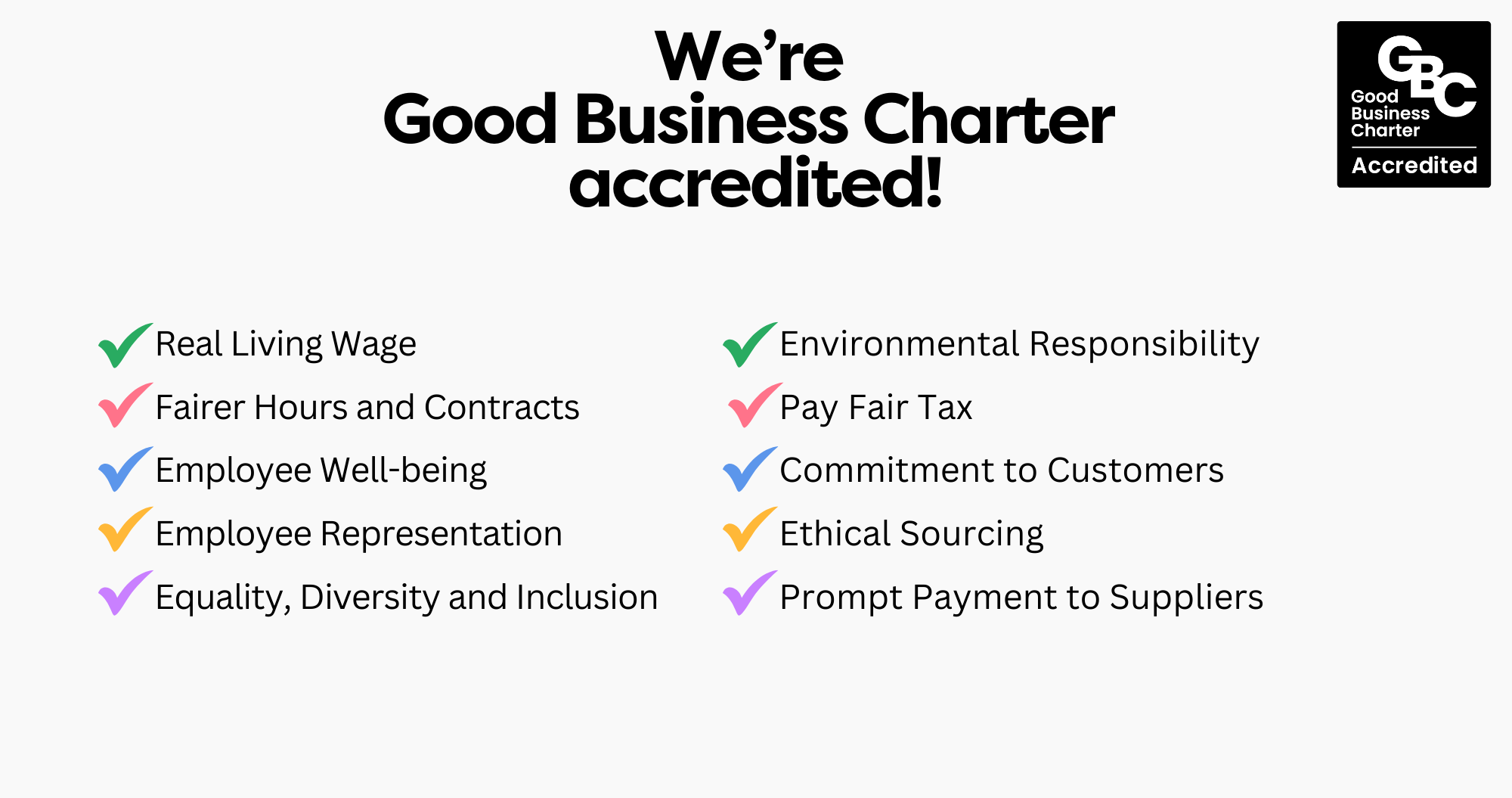
This notable recognition reflects our dedication to ethical business conduct across all aspects of our work. The GBC accreditation is awarded to businesses that meet ten key components, which focus on critical areas such as employee welfare, environmental impact, and fair treatment of clients and suppliers. By embracing all ten principles, A&C Chartered Accountants ensures that we not only grow our business but do so responsibly, staying true to our values and long-term goals.

Katie Hoszowskyj, Sustainability Lead at A&C Chartered Accountants, expressed her thoughts on this achievement: “Securing the Good Business Charter accreditation is a proud moment for us. It underscores our commitment to putting people, clients, and our community at the heart of what we do. This accreditation reflects our efforts to create a diverse, inclusive, and safe work environment that fosters personal growth and development for everyone at A&C Chartered Accountants.”

For over a decade, A&C Chartered Accountants has been dedicated to operating as a responsible business. We have a dedicated internal team that assesses our environmental footprint and continually implements measures that help us become more sustainable. Our responsible business journey involves encouraging sustainable practices, being accountable for our environmental and social impact, and promoting these principles to our team, clients, and community.

Our sustainability framework is centred around three pillars: reducing environmental impact, enhancing social responsibility, and upholding ethical governance. As we grow, we recognise the need for sustainable expansion, making strategic decisions that benefit not only our business but also the environment and the people we serve.

The ten components of the Good Business Charter that we are committed to are:

  1. Real Living Wage – We pay all our employees a wage that reflects the cost of living, not just the government minimum.
  2. Fairer Hours and Contracts – We ensure secure, stable employment by providing guaranteed hours and avoiding exploitative contracts.
  3. Employee Well-being – We prioritise the mental and physical health of our employees, ensuring they feel supported and valued.
  4. Employee Representation – We give our employees a voice, encouraging open communication and feedback within the business.
  5. Diversity and Inclusion – We promote an inclusive workplace where diversity is celebrated, and everyone is treated with respect and fairness.
  6. Environmental Responsibility – We are committed to reducing our environmental impact, actively working towards more sustainable practices.
  7. Paying Fair Tax – We pay the taxes we owe and commit to full transparency in our tax affairs.
  8. Commitment to Customers – We always act in the best interest of our clients, delivering high-quality services with integrity.
  9. Ethical Sourcing – We ensure our suppliers uphold high ethical standards and that our supply chain reflects our values.
  10. Prompt Payment – We adhere to the Prompt Payment Code, ensuring we pay our suppliers on time and maintain strong relationships.

Achieving GBC status aligns with our wider responsible business goals, having also signed up to the Prompt Payment Code earlier this year. Additionally, A&C Chartered Accountants is proud to be part of a growing group of UK businesses that voluntarily pay the real Living Wage, ensuring that all our staff are paid fairly for their contributions.

Katie Hoszowskyj added, “We believe in working together towards a sustainable future. Whether it’s reducing our plastic usage or aligning our efforts with the UN Sustainable Development Goals, we are committed to transparency and consistency across all our operations. Our partnerships with charities further cement our dedication to social responsibility and giving back to the communities we serve.”

This accreditation by the Good Business Charter marks a pivotal moment in A&C Chartered Accountants’ sustainability journey. As we continue to grow, we remain focused on making responsible decisions, driving profit with purpose, and holding ourselves accountable to our sustainability objectives. Our strategic framework will guide us in fostering a fair, ethical, and inclusive culture, while making sustainable choices at every step.

Reducing Your SME’s Carbon Footprint in Manchester: A Guide to Bee Net Zero

Manchester is a city known for its innovation, community spirit, and commitment to sustainability. In recent years, Manchester has set ambitious goals to reduce its carbon emissions, and SMEs are a vital part of that journey. Whether you’re a small business owner in retail, manufacturing, or services, reducing your carbon footprint isn’t just about playing your part in tackling climate change—it’s about future-proofing your business, saving costs, and joining a growing movement of environmentally conscious enterprises.

A&C Chartered Accountants is proud to support Manchester SMEs on their sustainability journey, and one of the key initiatives driving change in the region is Bee Net Zero.

What Is Bee Net Zero?

Bee Net Zero is a collaborative initiative designed to help businesses across Greater Manchester reach net zero carbon emissions by 2038—12 years ahead of the UK’s national target. Spearheaded by the Greater Manchester Combined Authority, in partnership with leading organisations like The Growth Company and Manchester’s business community, the Bee Net Zero initiative provides practical resources and guidance to help local businesses, including SMEs, reduce their carbon footprints.

For SMEs in Manchester, this initiative represents an incredible opportunity to lead the charge in decarbonisation while benefiting from the resources and support that Bee Net Zero provides.

Why Should Manchester SMEs Care About Their Carbon Footprint?

For many small businesses, reducing carbon emissions might feel like a challenge, but it brings significant rewards. Here’s why tackling your carbon footprint matters:

  • Meet Customer Expectations: Consumers and clients are increasingly seeking out businesses that prioritise sustainability. By actively reducing your carbon footprint, your SME can attract a new wave of eco-conscious customers.
  • Stay Ahead of Regulation: With more stringent climate legislation on the horizon, reducing your carbon emissions now means your business will be ahead of the curve when it comes to future compliance requirements.
  • Improve Efficiency & Cut Costs: Lowering your carbon emissions often goes hand-in-hand with improving efficiency. From cutting down on energy use to reducing waste, these changes can have a direct impact on your bottom line.
  • Join the Manchester Movement: By getting involved in initiatives like Bee Net Zero, you’ll be part of a wider community of businesses all working towards a common goal—making Manchester one of the greenest cities in the UK.

How to Start Measuring Your SME’s Carbon Footprint

Before you can reduce your carbon footprint, you need to know where you stand. This begins with calculating the carbon emissions your business generates. The main sources of emissions for most SMEs come from:

  • Energy consumption (electricity, heating, and cooling)
  • Business travel (vehicle emissions, flights, public transport)
  • Supply chain emissions (goods and services purchased)
  • Waste production (waste sent to landfill, recycling)

By gathering data on your energy usage, travel habits, and waste, you can begin to understand your current impact and set measurable goals to reduce emissions. Many Manchester-based businesses are already taking these steps as part of the Bee Net Zero initiative, using free tools and resources provided to track their emissions.

Bee Net Zero: Helping Manchester’s SMEs Lead the Way

The Bee Net Zero initiative offers a range of support services tailored to SMEs, including:

  1. Carbon Footprint Calculators: Bee Net Zero provides businesses with access to tools that help calculate their current carbon footprint, giving you a clear starting point for improvement.
  2. Energy Efficiency Guidance: Through the initiative, SMEs can access energy audits to identify opportunities to improve energy efficiency, reduce waste, and cut down on costs.
  3. Support for Renewable Energy Adoption: Transitioning to renewable energy is one of the most effective ways to decarbonise. Bee Net Zero connects businesses with suppliers and advisors to help switch to renewable energy sources, like solar power, at a manageable cost.
  4. Sustainability Grants & Funding: There are grants and financial incentives available to SMEs that are serious about reducing their carbon footprints. Bee Net Zero partners with organisations that provide financial support to help cover the costs of energy-efficient upgrades and renewable energy installations.
  5. Collaboration Opportunities: Bee Net Zero encourages collaboration across sectors, enabling businesses to share best practices, network, and create partnerships with like-minded organisations.

The Road to Net Zero: Practical Steps for Your SME

If you’re an SME in Manchester, there’s never been a better time to commit to reducing your carbon footprint. Here are some practical steps to get started:

1. Perform an Energy Audit

Identify where your business is using the most energy. This could be lighting, heating, or specific equipment. Once you’ve pinpointed the biggest energy drains, you can take steps to reduce consumption by upgrading to more energy-efficient systems or changing your habits.

2. Transition to Green Energy

Switching to a renewable energy provider is one of the simplest and most impactful ways to reduce your carbon emissions. Many suppliers now offer affordable green energy tariffs that are accessible to SMEs.

3. Encourage Sustainable Transport

Reduce business travel emissions by encouraging the use of public transport, carpooling, or even investing in electric vehicles for your company fleet.

4. Minimise Waste

Implement recycling schemes, reduce packaging, and find ways to repurpose materials within your supply chain. Waste management is a significant part of reducing your overall carbon footprint.

5. Engage Your Team

Sustainability works best when it’s embedded in your company culture. Educate your employees about the importance of reducing emissions and create a workplace that supports sustainable practices—whether that’s through reducing office waste or promoting energy-efficient behaviour.

Need more information?

At A&C Chartered Accountants, we’re not just accountants; we’re your partners in success. Based in Manchester, our experienced team handles everything from managing limited company and sole trader accounts to expertly navigating tax returns. Beyond financials, we play a crucial role in driving your business’s growth, strategically steering it towards success with confidence and clarity.
See what our clients say