
Tax relief for energy saving technology

For a number of years there has been a generous 100% tax break for businesses that install energy saving technology in their premises. This is in addition to the £200,000 annual investment allowance for plant and machinery.

The technology that qualifies for this 100% tax break includes energy efficient boilers and energy saving lighting systems. This is set out in the government’s energy-saving technology list. The list is updated each year. It was announced in the Autumn Budget that new technologies were being added but also certain items such as Biomass fired warm air heaters would no longer qualify from 1 April 2018.

Note also that where the expenditure has the effect of creating or increasing a loss for corporation tax purposes, the company can obtain a repayable first year tax credit. This credit, based on the amount of the loss attributable to the energy-saving technology spend, reduces to 2/3 of the corporation tax rate from 1 April 2018. Thus the relief reduces from 19% to just 12.67% from 1 April 2018.


What about downsizing to a smaller property?

The new inheritance tax relief for passing on the family home is protected even when you downsize to a smaller property.

For example, if a married couple currently lives in a large house worth £500,000 and downsizes to a flat worth £250,000 they could give away some of the proceeds during their lifetime and yet still benefit from inheritance tax relief based on the higher valued property. They could even sell up completely and move into a rental property and still get the inheritance tax relief!

Passing on the family home

New inheritance tax rules for passing on the family home started on 6 April 2017. This new relief should be taken into consideration when drafting your Will and we can work with your solicitor to make sure your Will is tax efficient.

From 6 April 2017 an additional nil rate band of £100,000 is now available on death where your residence is left to direct descendants. This is in addition to the normal £325,000 nil rate band and will increase over the next 4 years to £175,000 in 2020. This additional relief is however restricted If your assets exceed £2 million. The rules are fairly complicated but we can review your personal circumstances to ensure that you take advantage of all the relief that you are entitled to.

Pension planning

For most taxpayers the maximum pension contrbution is £40,000 each tax year, although this depends on their earnings. This limit covers both contributions by the individual and their employer.
Note that the unused allowance for a particular tax year may be carried forward for three years and can be added to the relief for the current, but then lapses if unused. Note also that for higher rate taxpayers the net cost of saving £10,000 in a pension is only £6,000 but this higher rate relief may not last for ever.

New year resolutions to save tax

At this time of year we think about New Year’s resolutions. It is also a good time to start planning your tax affairs before the end of the tax year on 5th April.
An obvious tax planning point would be to maximise your ISA allowances for the 2017/18 tax year (currently £20,000 each).
You might also want to consider increasing your pension savings before 5 April 2018 as the unused annual pension allowance is lost after three years.
For those looking to do some inheritance tax planning it would be a good time to review (or make) your Will in the light of the recent change in the IHT nil rate band.

Business rates relief for small businesses

There has been much lobbying from the small business sector to reduce business rates. The Chancellor stated that 600,000 small businesses currently benefit from small business rates relief.

In order to support the licensed trade from April 2017, pubs with a rateable value up to £100,000 are able to claim a £1,000 business rates discount for one year. This relief has now been extended until March 2019.

HOLIDAY HOME

Furnished holiday letting business is not a business for iht relief

A furnished holiday letting business is treated as a trade for most tax purposes. For example, capital allowances are available on furniture, and CGT entrepreneurs’ relief is available on disposal of the business.

However, a recent tax case has determined that a holiday letting business in Cornwall did not qualify for inheritance tax business property relief.

Despite the provision of a range of services to customers, the judge agreed with HMRC that the business was wholly or mainly that
of making or holding of investments and as such ineligible for any relief from inheritance tax.

Note that the restricted deduction for interest that started to apply to buy-to-let businesses from 6 April 2017 does not apply to furnished holiday lets.

There are special rules for a rental business to qualify as furnished holiday lettings, in particular the property must be available for letting for 210 days a year, and actually let for 105 days.

Must own 5% of ordinary shares to qualify for CGT entrepreneurs relief

In order for a shareholder to qualify for CGT entrepreneurs relief on the disposal of their shares, they must be an officer or employee of the company (or group) and hold 5% or more of the company’s ordinary share capital and voting rights for 12 months prior to the disposal. The company must also be a trading company or the holding company of a trading group throughout the same 12 month period.

In a recent tax case, the judge agreed with HMRC that in determining whether or not the shareholders held the required 5% of the ordinary share capital, all of the company’s shares should be considered except those with a fixed rate of dividend (preference shares). A lower court had previously decided that shares with no entitlement to dividends and voting rights could be disregarded.

When is a company van not a van

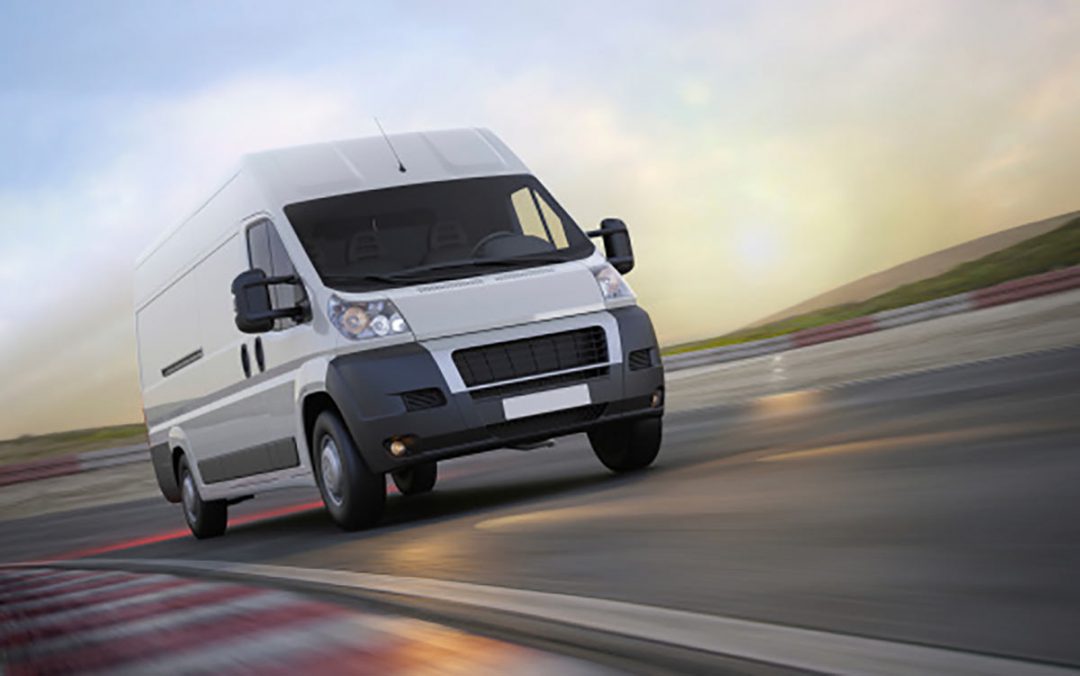
The P11d benefits on company vans are generally much lower than company cars and where private use of the van is merely incidental to its business use by the employee, then there is no taxable benefit at all. But when is a van not a van?

In a recent tax tribunal case, the judge agreed that a VW Kombi van that had been converted so that it had two rows of seats for passengers was a company car not a van.
Under the employee benefit rules, a van is a vehicle where its primary construction is for the conveyance of goods or burden. Kombi vans and those similar have not previously been thought to fall into this category due to them being designed to carry both goods and people. Historically, HMRC has offered a concession from 2002/2003 onwards for vehicles of a very similar construction, double cab pickups (including both uncovered and covered models), if the payload capacity of the pickup exceeds a metric tonne. HMRC accepts that these vehicles can be treated as a van for benefit in kind purposes. The judge decided that the primary construction of the kombi van was not for the conveyance of goods alone but rather that its purpose was for the conveyance of both goods and people equally. This means that the Kombi did not meet the requirement to be considered to be a van and therefore for benefit in kind purposes it was a car. The same judge however decided that Vauxhall Vivaro vans converted so that they had two rows of seats were vans!

Similar rules apply for VAT purposes so contact us first if you want to check the correct tax treatment of the vehicle you are planning to buy.

Reclaiming foreign vat on expenses

If your business has suffered VAT on expenses incurred in another EU country, for example, overseas hotel and restaurant bills, then it is possible to reclaim the foreign VAT.

The foreign VAT must not however be reclaimed on the UK VAT return but by using HMRC’s VAT online services system.

The foreign VAT refund claims can be made either quarterly or annually but there is a de-minimis amount that may be reclaimed quarterly.

The conditions for being able to reclaim the foreign VAT are that the business must:

  • be VAT registered in the UK
  • not be registered for VAT in the EU country nor have a place of business there
  • not make supplies of goods or services in that EU country, except for transport services

We can assist with your refund claims if this applies to your business. We offer a wide range of VAT services to help your business.

Our team of chartered accountants have a wealth of experience in a broad range of sectors, from construction and property to the charity sector.

If you want to learn more about how the team can help or simply want some tax advice from a trusted accountant, please contact us by filling in a contact form or calling 0161 962 1855.

Changing your company car? What about a hybrid next?

The next Finance Bill will include legislation to reduce significantly the taxable benefit on the provision of low CO2 emission cars from April 2020.

From 2020 there will be a 2% benefit in kind for company cars that emit no CO2 such as electric and hydrogen powered cars. At the same time the system for taxing hybrid company cars will also be significantly changed. For example a hybrid car emitting less than 50g CO2 per kilometer will also have a 2% P11d benefit provided it has a range on its electric motor of at least 130 miles. For example a BMW i3 hybrid costing £30,980 has a range of 181 miles so will qualify for the 2% benefit rate resulting in a taxable benefit of just £620 a year. Such a vehicle would also qualify for a 100% first year allowance which means that the £30,980 cost of the company car would be deducted in full against business profits.

Contact us if you would like to discuss the tax implications of your next business vehicle.

Trivial benefits

Remember that from 6 April 2016, benefits are exempt from tax and NICs if all the following conditions are satisfied:

• the cost of providing the benefit does not exceed £50;
• the benefit is not cash or a cash voucher;

• the employee is not entitled to the benefit as part of their employment conditions; and

• the employer does not provide the benefit in recognition of particular services provided by the employee

Where the employer is a close company and the benefit is provided to an individual who is a director or other office holder of the company (or to a member of their family or household) the exemption is capped at a total cost of £300 in the tax year.

Reporting expenses and benefits provided to employees

HMRC have recently updated their toolkit dealing with the reporting of expenses and benefits provided to employees and directors in the light of significant recent changes in this area.

HMRC toolkits are designed to help minimise the risk of errors in returns and computations and their use, although voluntary, will be taken into consideration in determining whether or not reasonable care has been taken in the completion of a return such as a form P11d reporting expenses and benefits.
Reminder: It is no longer necessary to obtain a reporting dispensation from HMRC for certain reimbursed expenses such as travelling and subsistence. But it is still important for the employer to keep records to demonstrate that such expenses have been reviewed to ensure that they have been incurred wholly, exclusively and necessarily in the performance of the employee’s duties. The toolkit reminds us to keep a record of the date and details of the expenses and benefits provided with associated documentation and also a record of any contributions made by a director or employee towards the cost of expenses and benefits provided to them. This recording also includes the new exemption for the provision of trivial benefits to employees.

Is your company carrying out research and development?

Many companies are still missing out on valuable tax breaks for expenditure on research and development (R&D). Revenue and Customs (HMRC) have recently updated their guidance on claiming R&D tax credit relief and have reminded companies that it is possible to obtain advance assurance that the R&D activities are eligible to make a claim.

If you are a Small or Medium Enterprise (SME), broadly with fewer than 500 full-time employees and either an annual turnover below 100 million euros or a balance sheet total under 86 million euros, then the tax relief is 230% of the amount spent on R&D. So if your company spent £100,000 on R&D then the profits would be reduced by a further £130,000.
In many cases this enhanced deduction will create or increase a loss which can be set off against other profits or carried forward against future profits. However it is also possible to obtain “cash back” from HMRC at the rate of 14.5%. So if the £130,000 tax relief above has the effect of turning a £50,000 profit into an £80,000 loss then HMRC would refund £11,600 in tax to the company rather than have to wait until future profits are made.
In order to make a claim for R&D tax relief the R&D project must seek to achieve an advance in overall knowledge or capability in a field of science or technology through the resolution of scientific or technological uncertainty. Contact us if you think that some of the work being carried out by your company’s technical staff might qualify as R&D and we can help you make a claim for this generous tax relief.

Thinking of winding up your company?

Up until 6 April last year, the distribution of cash to shareholders on the winding up of a trading company by a liquidator, was usually taxed as a capital gain, potentially taxed at just 10% with the benefit of entrepreneurs’ relief.

However, last year’s Finance Act introduced a targeted anti-avoidance rule that may tax such a distribution as a dividend at income tax rates up to 38.1% under certain circumstances.

HM Revenue and Customs have recently issued guidance in an attempt to clarify when the new anti-avoidance rule would apply.

Broadly the anti-avoidance is intended to catch situations where the old company is wound up and a similar business is carried on by a connected business. Note however, the distribution would only be taxed as a dividend at income tax rates if one of the main purposes of the transaction was to avoid tax. This is a complex area so please contact us to discuss your plans so you do not fall foul of the new anti-avoidance rule.

Working in the “gig” economy

The House of Commons Work and Pensions Committee has recently published a report calling on the Government to close the loopholes that allow “bogus” self-employment practices, which burden the welfare state but reduce the tax contributions needed to sustain it.

This follows the “Matthew Taylor” inquiry which took evidence during February and March 2017 from witnesses including representatives of companies such as Uber, Amazon, Hermes and Deliveroo. Most of the people working for such organisations were not on the payroll and have limited workers rights and are paid for each delivery or “gig”. The Committee recommended a default assumption of “worker” status, rather than “self-employed”, and said that the incoming Government should set out a roadmap for equalising the NICs paid by employees and the self-employed.

Mr Taylor was also asked to produce a report on the status of such workers and suggested that a new category of “dependent contractor” should be established, but the report did not conclude on how such a worker should be taxed.