Pension Planning in 2022

Pension Planning in 2022

In the run up to the Autumn Budget many were predicting that the chancellor might announce restrictions to pension tax relief. Thankfully nothing has changed -yet.

For most taxpayers the maximum pension contribution continues to be £40,000 each tax year. This limit covers both contributions by the individual and by their employer into their pension fund.

Note that the unused allowance for a particular tax year may be carried forward for three years and can be added to the relief for the current year, but then lapses if unused.  Thus, the unused pension allowance for 2018/19 will lapse on 5 April 2022 if unused.

Need more information?

Do you need further guidance on Pension Planning in 2022?

We offer a wide range of services which are unique to your business. Our team of chartered accountants have a wealth of experience in a broad range of sectors, from construction and property to the charity sector. Our team work hard to ensure they create smart and effective tax-efficient solutions for start-ups to optimise growth and help them succeed. If you want to learn more about how the team can help or simply want some start-up advice from a trusted accountant do hesitate to contact us. For more information please do hesitate to contact us on 0161 962 1855. Alternatively you can email us using the form below and we will contact you as soon as possible.

Our fantastic team at A&C Chartered Accountants are here to help.

New Year tax planning ideas

New Year tax planning ideas

At this time of year, we think about New Year’s resolutions. It is also a good time to start planning your tax affairs before the end of the tax year on 5th April.

An obvious tax planning point would be to maximise your ISA allowances for the 2021/22 tax year (still £20,000 each).

You might also want to consider increasing your pension savings before 5 April 2022 as the unused annual pension allowance is lost after three years. For those looking to do some inheritance tax planning it would be a good time to review (or make) your Will.

Need more information?

Do you  need more guidance on New Year tax planning ideas?

We offer a wide range of services which are unique to your businesses who are just getting going! Our team of chartered accountants have a wealth of experience in a broad range of sectors, from construction and property to the charity sector. Our team work hard to ensure they create smart and effective tax-efficient solutions for start-ups to optimise growth and help them succeed. If you want to learn more about how the team can help or simply want some start-up advice from a trusted accountant do hesitate to contact us. For more information please do hesitate to contact us on 0161 962 1855. Alternatively you can email us using the form below and we will contact you as soon as possible.

Our fantastic team at A&C Chartered Accountants are here to help.

130% super-deduction for investing in new plant continues

130% super-deduction for investing in new plant continues:

Many businesses may have been too short of cash to take advantage of the new super-deduction for investing in new plant in 2021 but may be more confident about investing in 2022.

This tax break, which started on 1 April 2021 continues until 31 March 2023, allows companies to deduct 130% of the cost of new plant and machinery from their profits where that plant would normally be included in the general capital allowances pool.

If a company buys a new commercial vehicle costing £50,000 that means they can deduct £65,000 from trading profit saving £12,350 in corporation tax. Note that there would be a clawback charge on disposal of the asset, which could be as much as 130% of the proceeds.

There is currently no financial limit on the amount that the company spends on new equipment qualifying for 130% tax relief.

Need more information?

Do you need further guidance on super-deduction?

We offer a wide range of services which are unique to your business. Our team of chartered accountants have a wealth of experience in a broad range of sectors, from construction and property to the charity sector. Our team work hard to ensure they create smart and effective tax-efficient solutions for start-ups to optimise growth and help them succeed. If you want to learn more about how the team can help or simply want some start-up advice from a trusted accountant do hesitate to contact us. For more information please do hesitate to contact us on 0161 962 1855. Alternatively you can email us using the form below and we will contact you as soon as possible.

Our fantastic team at A&C Chartered Accountants are here to help.

£1 million annual investment allowance still available

£1 million annual investment allowance still available

Second hand plant and machinery does not qualify for the 130% super-deduction but would still qualify for the 100% Annual Investment Allowance (AIA).

The amount of expenditure qualifying for 100%  tax relief was originally scheduled to revert to just £200,000 from 1 January 2021 but will now continue at £1 million until 31 March 2023.

Although the 130% super-deduction only applies to limited companies the AIA is available to sole traders and partnerships as well.

Remember that there is currently a further 100% first year allowance for the cost of buying a new zero emission car for the business.

Previously 100% relief was available where the CO2 emissions of the car were no more than 50g per kilometre. However, that threshold changed in April 2021.

Need more information?

Do you need more information on plant & machinery. Do you need more guidance on the £1 million annual investment allowance still available?

We offer a wide range of services which are unique to your business. Our team of chartered accountants have a wealth of experience in a broad range of sectors, including construction. Our team work hard to ensure they create smart and effective tax-efficient solutions for start-ups to optimise growth and help them succeed. If you want to learn more about how the team can help or simply want some start-up advice from a trusted accountant do hesitate to contact us. For more information please do hesitate to contact us on 0161 962 1855. Alternatively you can email us using the form below and we will contact you as soon as possible.

Our fantastic team at A&C Chartered Accountants are here to help.

New Year, New Opportunities – Freeports

New Year, New Opportunities – Freeports

In his Spring 2021 Budget the Chancellor announced that there would be 8 “Freeports” in England with generous tax breaks to encourage businesses to set up and invest in those areas. The devolved governments will also be announcing locations in Scotland, Wales and Northern Ireland in due course.

The proposed locations of the freeports can be found here: https://www.gov.uk/guidance/freeports#where-are-they-located

SUMMARY OF FREEPORT TAX ADVANTAGES

The main tax and customs duty advantages of locating in a designated freeport area are as follows:-

  • SDLT exemption on the purchase of land and buildings in the area
  • 10 year write off of the cost of constructing or renovating commercial property
  • Enhanced capital allowances for investment in plant and machinery
  • Exemption from employers NICs for certain staff working in the freeport area
  • Special VAT and Customs Duty rules

7 of the 8 freeport areas are on the coast and thus ideal locations for businesses importing goods into the UK. There is however no restriction on the nature of business carried out within the designated freeport area.

The eighth English freeport is around East Midlands Airport which would be an ideal place to locate a distribution centre, being half way up the M1 motorway.

Please contact us for more details on the tax breaks for locating in one of the designated freeport areas.

Need more information?

Do you need further guidance with freeports? We offer a wide range of services which are unique to your business. Our team of chartered accountants have a wealth of experience in a broad range of sectors, from construction and property to the charity sector. Our team work hard to ensure they create smart and effective tax-efficient solutions for start-ups to optimise growth and help them succeed. If you want to learn more about how the team can help or simply want some start-up advice from a trusted accountant do hesitate to contact us. For more information please do hesitate to contact us on 0161 962 1855. Alternatively you can email us using the form below and we will contact you as soon as possible.

Our fantastic team at A&C Chartered Accountants are here to help.

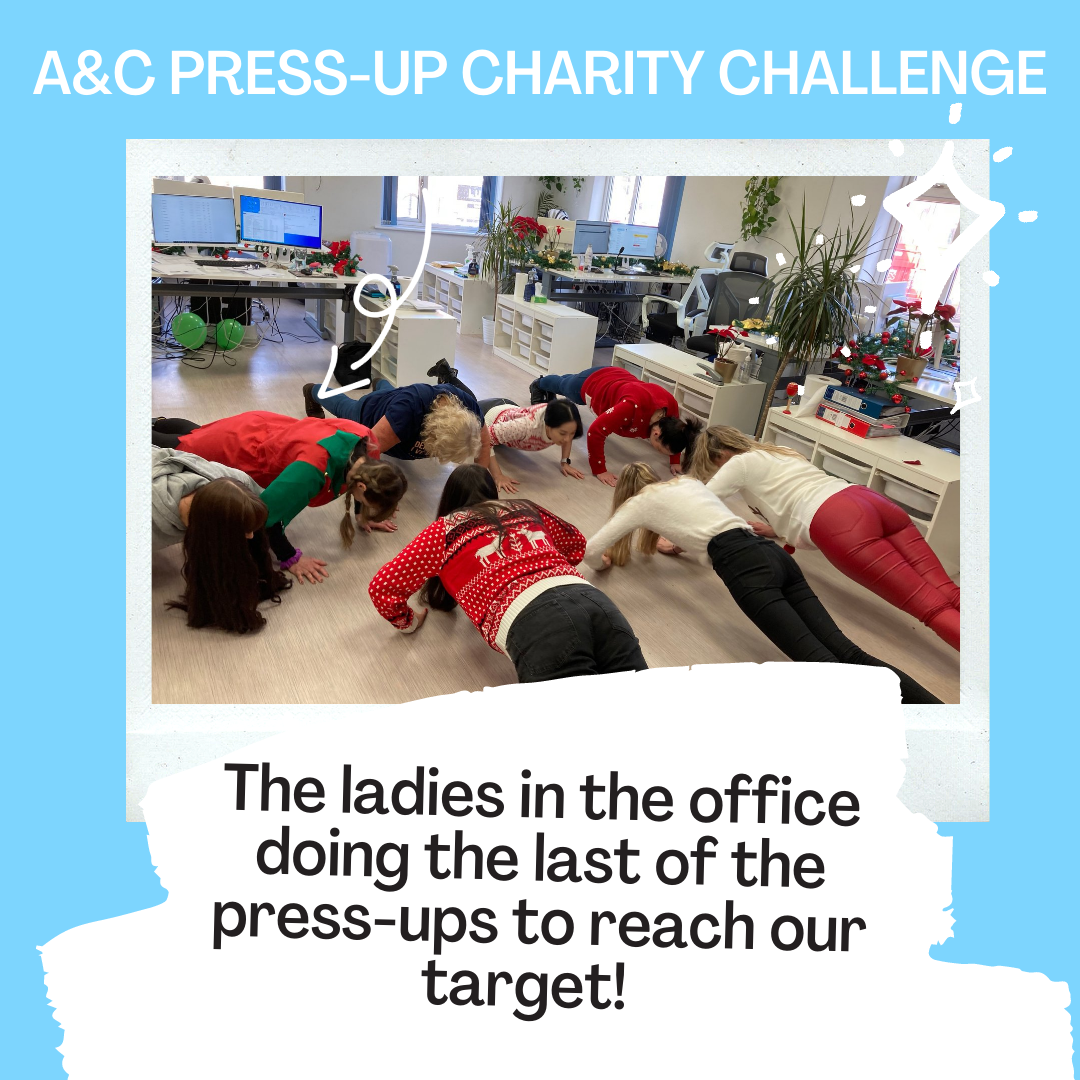
20,000 press-ups in 20 days – achieved by our team!

Well done to our team! Firstly, we would like to say a big thank you to all clients for your donations so far. We are delighted to confirm we have now completed our 20,000 press-ups for Royal Manchester Children’s Hospital and we are so close to reaching our target of £3000! Together, we have raised an incredible £2,745! We are so close and we really appreciate any last minute donations to help us reach our target by the end of the day! Above is an image of the ladies in the office doing the last of the press-ups together – What a great team we have!

You can donate here!

Need more information?

Would you like to be involved in a charity challenge? We offer a wide range of services which are unique to your business. Our team of chartered accountants have a wealth of experience in a broad range of sectors, from construction and property to the charity sector. Our team work hard to ensure they create smart and effective tax-efficient solutions for start-ups to optimise growth and help them succeed. If you want to learn more about how the team can help or simply want some start-up advice from a trusted accountant do hesitate to contact us. For more information please do hesitate to contact us on 0161 962 1855. Alternatively you can email us using the form below and we will contact you as soon as possible.

Our fantastic team at A&C Chartered Accountants are here to help.

Trust planning opportunity still available

Trust planning opportunity still available:

Another tax planning strategy that is still available despite rumours that it would be closed in the Budget was the CGT hold over relief when assets are transferred into or out of a trust.

This relief currently enables a non-business asset, such as an investment property, to be transferred without paying CGT. The relief applies where the transfer is subject to inheritance tax, but where the value transferred is no more than the £325,000 IHT nil rate band the transfer of the asset can take place without IHT or CGT being payable.

For example, Colin, a higher rate taxpayer, wants to gift his adult daughter Liz an investment property worth £300,000.

The property cost him £100,000 a number of years ago. If he were to transfer the property to Liz directly there could be up to £56,000 CGT payable on the £200,000 gain.

If the property is transferred to a trust for the benefit of Liz then the transaction would be immediately chargeable to IHT but covered by the £325,000 nil rate band. The resulting gain could then be held over so that no CGT is payable.

At a later date the property could be transferred from the trustees to Liz providing another opportunity to hold over the capital gain.

If this strategy may be of interest to you please get in touch. You will also need to instruct a competent trust lawyer to set up the trust.

Need more information?

Do you need more guidance on trust planning opportunities? We offer a wide range of services which are unique to your business. Our team of chartered accountants have a wealth of experience in a broad range of sectors, from construction and property to the charity sector. Our team work hard to ensure they create smart and effective tax-efficient solutions for start-ups to optimise growth and help them succeed. If you want to learn more about how the team can help or simply want some start-up advice from a trusted accountant do hesitate to contact us. For more information please do hesitate to contact us on 0161 962 1855. Alternatively you can email us using the form below and we will contact you as soon as possible.

Our fantastic team at A&C Chartered Accountants are here to help.

Regular gifts out of your income is tax efficient

Regular gifts out of your income is tax efficient:

One tax planning opportunity that many thought the chancellor might restrict was the exemption from inheritance tax for regular gifts out of an individual’s income. Inheritance tax is designed to tax transfers of capital so if the donor can demonstrate that the gifts are made out of surplus income then the transfers are not taken into consideration for IHT. The exemption applies where there is a regularity to the payments, such as a standing order to pay school fees. HMRC will also require proof that the payments are paid out of post-tax income and do not limit the donor’s normal lifestyle. Detailed records are required, and we can help you with a suitable spreadsheet.

Need more information?

Do you need more guidance on how your  income can be tax efficient? We offer a wide range of services which are unique to your business. Our team of chartered accountants have a wealth of experience in a broad range of sectors, from construction and property to the charity sector. Our team work hard to ensure they create smart and effective tax-efficient solutions for start-ups to optimise growth and help them succeed. If you want to learn more about how the team can help or simply want some start-up advice from a trusted accountant do hesitate to contact us. For more information please do hesitate to contact us on 0161 962 1855. Alternatively you can email us using the form below and we will contact you as soon as possible.

Our fantastic team at A&C Chartered Accountants are here to help.

Christmas is the time for giving

Christmas is the time for giving:

Many were expecting the chancellor to announce changes to inheritance tax (IHT) in his Autumn Budget, However, like capital gains tax (CGT), the rules have remained broadly the same as last year. That means that each tax year individuals may make gifts of up to £3,000 in total and that amount is not included in their cumulative total of gifts for IHT.

Even if the £3,000 annual exempt amount is exceeded, provided it is an outright gift to an individual, there would be no inheritance tax payable provided the donor survives for 7 years.

Note that the gift of an asset other than cash may also give rise to a capital gain and CGT may be payable where the asset has increased in value. However if you give away a business asset such as shares in your trading company it is possible to make a claim to hold over the gain so that no CGT is payable. We can of course advise you on the procedure to follow.

Need more information?

Christmas is the time for giving. Do you need more support with this topic? We offer a wide range of services which are unique to your business. Our team of chartered accountants have a wealth of experience in a broad range of sectors and our team work hard to ensure they create smart and effective tax-efficient solutions for start-ups to optimise growth and help them succeed. If you want to learn more about how the team can help or simply want some start-up advice from a trusted accountant do hesitate to contact us. For more information please do hesitate to contact us on 0161 962 1855. Alternatively you can email us using the form below and we will contact you as soon as possible.

Our fantastic team at A&C Chartered Accountants are here to help.

Budgeting for an uncertain year ahead

As we come to the end of 2021, its time to start thinking about the budget for next year. One thing is certain – uncertainty.

Business planning and budgeting have become increasingly complex in today’s uncertain and volatile environment. Firms have had to adapt and become more agile in order to react quickly to changing market conditions and budgets should be created with this in mind.

Start with your fixed costs – the things that you can be certain of such as premises, staff costs, raw materials, light, heat, electricity, IT, etc. Next, turn your focus to the longer term aspects of your budget with an analysis of existing strategic or capital spending plans.

Stress test the assumptions, scenarios and decisions that have gone into your draft budget. What if your sales don’t grow next year? What if your annuity income falls because 10% of your customers leave and go to another provider? How does this affect the profitability of the firm?

In uncertain times, it is important to be pragmatic. Create 3 scenarios for your budget – high, medium and low. Start with the medium scenario – the “expected” outcome and from there you can derive variations on whether things turn out better (high) or worse (low).

Scenario-based budgeting is not intended to predict exact outcomes.

Instead it is intended to help the business to understand the likely variances and prepare accordingly.

Hold back some spending centrally as a contingency. This builds some flexibility into the budget so that the business can react to changing circumstances as the year progresses.

Calculate your budget using new data, not historical projections. Budgets may have been squeezed in the past 18 months and may not reflect the current or predicted market trends.

Finally and most importantly, build realistic income models. Ensure you provide for bad debts and write offs in each of your high, medium and low scenarios. Cash is king and in uncertain times every business must focus on getting cash in on a monthly or even weekly basis. Billing cycles and cash collection management should be at the top of the agenda for the management team and offering extended payment terms to customers should be avoided as much as possible. Build these principles into your budget and ensure you keep adequate reserves in case you encounter headwinds during the year ahead.

Need more information?

We offer a wide range of services which are unique to your business and can help you budget for next year. Our team of chartered accountants have a wealth of experience in a broad range of sectors, from construction and property to the charity sector. Our team work hard to ensure they create smart and effective tax-efficient solutions for start-ups to optimise growth and help them succeed. If you want to learn more about how the team can help or simply want some start-up advice from a trusted accountant do hesitate to contact us. For more information please do hesitate to contact us on 0161 962 1855. Alternatively you can email us using the form below and we will contact you as soon as possible.

Our fantastic team at A&C Chartered Accountants are here to help.

Our list of tax-free benefits and perks for employees

Below we have compiled a list of tax-free benefits and perks you can provide an employee. These perks are completely free of tax and National Insurance Contributions (NICs). If you have any queries on any of the points below, please do not hesitate to contact us.
1. Equipment e.g. computers, laptops, iPods
2. One mobile phone or a Personal Digital Assistant (PDA)
3. A bicycle and safety equipment.
4. Refreshments.
5. Breakfast for early starters if available to all staff (see Lunch).
6. Lunch and refreshments while at work.
7. Travelling expenses to temporary workplaces.
8. Subsistence costs when travelling on business.
9. Annual parties and functions.
10. ‘Trivial’ gifts & benefits.
11. Round sum overnight allowances.
12. Free vehicle parking at work.
13. Interest-free borrowing beneficial loan.
14. Employer contributions to company or employee’s own pension scheme.
15. Pensions advice to the value of £500.
16. Recreational benefits.
17. Training and course fees.
18. £6 per week for homeworking
19. Medical and optical check-ups.
20. Low benefit-cost on low emission car.
21. Low benefit-cost on low emission van.
22. A van for commuting.
23. Relocation expenses.
24. Reimbursement of travel costs when coming to work in the UK.
25. Capital growth in your company via EMI options.
26. Staff Suggestion Schemes: £25 to £5,000.
27. Legal fees: employees no longer pay tax on legal support from their employer.
28. Workplace charging facilities for electric vehicles
29. Life assurance policy premiums that provide an employee with death benefit

Need more information?

Do you need further guidance on our list of tax-free benefits and perks you can provide an employee. These perks are completely free of tax and National Insurance Contributions (NICs). We offer a wide range of services which are unique to your business. Our team of chartered accountants have a wealth of experience in a broad range of sectors, from construction and property to the charity sector. Our team work hard to ensure they create smart and effective tax-efficient solutions for start-ups to optimise growth and help them succeed. If you want to learn more about how the team can help or simply want some start-up advice from a trusted accountant do hesitate to contact us. For more information please do hesitate to contact us on 0161 962 1855. Alternatively you can email us using the form below and we will contact you as soon as possible.

Our fantastic team at A&C Chartered Accountants are here to help.

HMRC support with childcare costs

HMRC support with childcare costs:

With more employees going back to work after the end of CJRS furlough support, they need to start thinking about childcare if they have children.

If they haven’t already done so employees should set up a “Tax-Free” Childcare Account to help pay towards the cost of childminders, breakfast and after school clubs, nursery fees and approved play schemes.

For every £8 an eligible family pay into the special account the government adds £2, up to £2,000 a year, or up to £4,000 a year if a child is disabled. The scheme is available to parents or carers who have children aged up to 11, or 17 if their child is disabled.

Need more information?

We offer a wide range of services which are unique to your businesses who are just getting going! Our team of chartered accountants have a wealth of experience in a broad range of sectors, from construction and property to the charity sector. Our team work hard to ensure they create smart and effective tax-efficient solutions for start-ups to optimise growth and help them succeed. If you want to learn more about how the team can help or simply want some start-up advice from a trusted accountant do hesitate to contact us. For more information please do hesitate to contact us on 0161 962 1855. Alternatively you can email us using the form below and we will contact you as soon as possible.

Our fantastic team at A&C Chartered Accountants are here to help.

Making tax digital for income tax postponed to 2024/25

Making tax digital for income tax postponed to 2024/25:

Having listened to stakeholder feedback from businesses and the accounting profession, the government have announced that they will introduce Making Tax Digital (MTD) for Income Tax Self-Assessment (ITSA) a year later than planned, in the tax year beginning in April 2024.

This will give the self-employed and buy-to-let landlords an extra year to prepare for the digitalisation of Income Tax and also allow HMRC more time for customer testing of the pilot system.

The start date for partnerships to join MTD for ITSA has been put back still further to the tax year beginning in April 2025.

There has been no change to the £10,000 per annum gross income threshold, which means that most self-employed traders and buy-to-let landlords will be mandated to comply with MTD for income tax from April 2024.

Need more information?

Making tax digital for income tax; do you need support with this? We offer a wide range of services which are unique to your business and have a wealth of experience with making tax digital! Our team work hard to ensure they create smart and effective tax-efficient solutions for start-ups to optimise growth and help them succeed. If you want to learn more about how the team can help or simply want some start-up advice from a trusted accountant do hesitate to contact us. For more information please do hesitate to contact us on 0161 962 1855. Alternatively you can email us using the form below and we will contact you as soon as possible.

Our fantastic team at A&C Chartered Accountants are here to help.

Capital allowances on plant in residential property

The capital allowances legislation specifically denies tax relief for plant and machinery installed in a dwelling house. However, plant and machinery installed in the common areas of blocks of flats such as hallways, stairs and lift shafts would qualify as the flats themselves are the dwellings not the building as a whole.

HMRC have recently confirmed their view that common areas in Houses of Multiple Occupation (HMO) are parts of a “dwelling house” and ineligible for capital allowance claims.

This would seem inconsistent with the treatment of blocks of flats and there may be a test case on the interpretation, particularly as there is no definition of “dwelling house” in the tax legislation.

There is also a lack of clarity concerning the status of University Halls of residence where there is often substantial expenditure on plant and machinery in common areas.

Need more information?

Do you need further guidance on the capital allowances legislation?

We offer a wide range of services for your business. Our team of chartered accountants have a wealth of experience in a broad range of sectors, from construction and property to hospitality and manufacturing.

Our tax advisors work hard to ensure they create smart, effective solutions for our clients. If you want to learn more about how the team can help, please don’t hesitate to contact us.

Increase in NICs and dividend tax to fund health and social care

Increase in NICs and dividend tax to fund health and social care

The Prime Minister announced on 7th September that the government will introduce a new 1.25% Levy to provide an extra £12 bn a year to support the NHS and social care.

From April 2022 it is proposed that there will be a 1.25% rise in National Insurance Contributions (NICs) to be paid by both employers and workers. This will then become a separate Levy on earned income from 2023/24 – calculated in the same way as NIC and appearing on an employee’s payslip.

Note that the 1.25% increase also applies to the Class 4 contributions paid by the self-employed on their profits. The Class 1 NI contributions paid by employees increase to 13.25% of earnings above £9,568 and the self-employed rate increases to 10.25%. The 3% differential remains for the time being, although there are rumours that the rates will align in the future. Above £50,270 earnings or profits the rate will be 3.25%.

The employers Class 1 NIC rate will increase from 13.8% to 15.05% from 6 April 2022, however many small businesses are able to set off the £4,000 employment allowance against their employers NIC liability. Many workers operating through personal service companies to whom the new “off-payroll” working rules apply will also be caught by the proposed measures.

DIVIDEND TAX RATES ALSO INCREASING FROM 2022/23

It is also proposed that there will be a 1.25% increase in the rate of tax payable on dividends received by those who own shares in companies. This would mean that after the £2,000 tax free dividend allowance the rate of tax would be 8.75% for basic rate taxpayers, 33.75% for higher rate taxpayers and 39.35% for those with income in excess of £150,000 a year. This will catch many family company director/shareholders who traditionally “pay” themselves by taking a low salary and larger dividends to minimise NICs.

PLANNING ACTIONS BEFORE THE NEW RATES COMMENCE

The announcement of the proposed changes more than six months before they take effect means that there is time to reduce the impact. Employees could consider agreeing a salary sacrifice arrangement with their employer, for example sacrificing their £5,000 annual bonus for an additional pension contribution paid by their employer. Such an arrangement would save 1.25% NICs for both employee and employer as well as £2,000 income tax where the employee is a higher rate taxpayer.

Employees might also consider a salary sacrifice in favour of an electric company car.

Shareholder/directors of family companies could consider bringing forward dividend payments to before 6 April 2022. Such a strategy needs careful planning as if the extra dividend takes the taxpayer’s income above £50,270 the excess would be taxable at the 32.5% rate instead of the 7.5% rate and the planning could backfire.

Need more information?

Do you need further guidance on the increase in NICs and dividend tax to fund health and social care? We offer a wide range of services which are unique to social care businesses. Our team of chartered accountants have a wealth of experience in this sector. Our team work hard to ensure they create smart and effective tax-efficient solutions for start-ups to optimise growth and help them succeed. If you want to learn more about how the team can help or simply want some start-up advice from a trusted accountant do hesitate to contact us. For more information please do hesitate to contact us on 0161 962 1855. Alternatively you can email us using the form below and we will contact you as soon as possible.

Our fantastic team at A&C Chartered Accountants are here to help.

Notify option to tax land and buildings within 30 days

If you are notifying HMRC of a decision to opt to tax land and buildings, you are normally required to notify HMRC within 30 days. The 30-day deadline was temporarily extended to 90 days to help businesses and agents during the pandemic, but that temporary extension has now ended for decisions made from 1 August 2021 onwards.

Supplies of land and buildings, such as leasing or renting out a property, are normally exempt from VAT. This means that no VAT is payable, but the person making the supply cannot normally recover any of the VAT incurred on property expenses.

However, it is possible to waive the exemption, or “opt to tax” the land. For the purposes of VAT, the term ‘land’ includes any buildings or structures permanently affixed to it.

Once you have opted to tax all the supplies you make your interest in the land or buildings will normally be standard-rated, and this will normally enable you to recover any VAT you incur in making those supplies.

Need more information?

If you are notifying HMRC of a decision to opt to tax land and buildings we can help.

Our team of property accountants have a wealth of experience across construction, residential and commercial property. If you want to learn more about how the team can help or simply want some start-up advice from a trusted accountant don’t hesitate to contact us.

Accounting for import VAT on your VAT return

Accounting for import VAT on your VAT return explained:

HMRC have recently updated their guidance on accounting for VAT on goods imported from outside the UK which, since Brexit, includes the European Union.

Businesses registered for VAT in the UK can account for import VAT on their VAT Return for goods imported into:

  • Great Britain (England, Scotland and Wales) from anywhere outside the UK
  • Northern Ireland from outside the UK and EU

Businesses can also account for import VAT for goods moved between Great Britain and Northern Ireland that are declared into a customs special procedure, when they are removed from that special procedure.

You do not need HMRC approval to account for import VAT on your VAT Return.

Accounting for import VAT on your VAT Return has significant cash flow benefits as you declare and recover import VAT on the same VAT Return, rather than having to pay it upfront when the goods are imported and recover it later.

Need more information?

We offer a wide range of VAT services to help your business.

Our team of chartered accountants have a wealth of experience in a broad range of sectors, from construction and property to the charity sector.

If you want to learn more about how the team can help or simply want some tax advice from a trusted accountant, please contact us by filling in a contact form or calling 0161 962 1855.

Making tax Digital for income tax coming soon

Making tax Digital coming soon for income tax:

VAT registered business making taxable supplies above the £85,000 registration threshold have been grappling with Making Tax Digital (MTD) since April 2019. The next roll-out will be the introduction of MTD for income tax which is scheduled to start in April 2023.

The obligation to keep records in a digital format and report information quarterly will apply to unincorporated businesses and property landlords with gross income in excess of £10,000 a year. Businesses operating MTD for VAT will already have MTD compliant accounting software but the extension of MTD to income tax will mean a major change for property rental businesses who are outside of the current rules.

There are a number of MTD compliant accounting software packages that you might wish to consider and we can of course advise you on the one that is most appropriate for your business. There are even relatively cheap software packages specifically designed for property rental businesses.

INFORMATION IN QUARTERLY MTD FOR INCOME TAX REPORTS

The precise details of what needs to be reported each quarter have yet to be finalised, but the categories of income and expenditure are likely to be the same as currently reported for self-assessment.

The accounting software will need to record income and expenditure into the following main categories:

  • Turnover/gross rents
  • Costs of goods sold
  • Materials
  • Wages and salaries of employees
  • Sub-contractor costs
  • Rent, rates, power, insurance
  • Repairs and renewals
  • Professional fees
  • Telephone and other office costs
  • Interest on bank and other loans
  • Motor and travel expenses

It is unclear at this stage how loans to finance residential lettings will be reported as those costs are no longer deducted in arriving at rental profits as relief is now given by way of a basic rate tax deduction.

TIMING OF MTD FOR INCOME TAX REPORTS

It is currently proposed that there will be 4 quarterly reports to HMRC followed by a finalisation return when end of year adjustments will be made. For a buy to let business that would mean quarterly returns made up to 5 July, 5 October, 5 January and 5 April. There would then be a MTD finalisation submission the following 31 January.

ABOLITION OF BASIS PERIODS AND NEW TAX YEAR END?We are awaiting further information on MTD from HMRC this summer but one significant announcement on 20 July was draft legislation to abolish basis periods for unincorporated businesses for the 2023/24 tax year to simplify MTD reporting.

That change would apply to sole traders, partnerships, as well as trusts with trading and property rental income. There would also be complicated transitional rules for 2022/23 which could result in a big tax bill that year for some traders.

The Treasury are also consulting on changing the tax year itself from the archaic 5 April year end to 31 March or even 31 December. A calendar tax year would bring the UK into line with most other countries at last!

We will keep you updated when more information comes available.

Need more information?

We offer a wide range of services which are unique to your business and will guide you through making tax digital. Our team of chartered accountants have a wealth of experience in a broad range of sectors and our team work hard to ensure they create smart and effective tax-efficient solutions for start-ups to optimise growth and help them succeed. If you want to learn more about how the team can help or simply want some start-up advice from a trusted accountant do hesitate to contact us. For more information please do hesitate to contact us on 0161 962 1855. Alternatively you can email us using the form below and we will contact you as soon as possible.

Our fantastic team at A&C Chartered Accountants are here to help.

Off-payroll working – Check Employment Status for Tax

Check Employment Status for Tax

Since 6 April 2021 large and medium-sized organisations have had to determine whether or not a worker supplying their services via their own personal service company would be treated as an employee if directly engaged.

HMRC suggest organisations use their Check Employment Status for Tax (CEST) tool on their website to check the worker’s status, although that is not obligatory.

HMRC have recently confirmed that they will be bound by the result of the software provided the information is accurate and it is used in accordance with their guidance. However, they will not stand by results achieved through contrived arrangements that have been deliberately created or designed to get a particular outcome.

Need more information?

HMRC suggest organisations use their Check Employment Status for Tax (CEST) tool and we are here to help you and your business. We offer a wide range of services which are unique to your business! Our team of chartered accountants have a wealth of experience in a broad range of sectors, from construction and property to the charity sector. Our team work hard to ensure they create smart and effective tax-efficient solutions for start-ups to optimise growth and help them succeed. If you want to learn more about how the team can help or simply want some start-up advice from a trusted accountant do hesitate to contact us. For more information please do hesitate to contact us on 0161 962 1855. Alternatively you can email us using the form below and we will contact you as soon as possible.

Our fantastic team at A&C Chartered Accountants are here to help.

Company loss relief can be claimed early

Company loss relief can be claimed early

Where a company makes a trading loss of no more than £200,000 in an accounting period it is now possible to claim relief for that loss even though the corporation tax return CT600 has not been submitted.

This will enable the company to carry back the loss to earlier years and obtain a repayment of tax previously paid.

HMRC will however need evidence of the loss to support the claim, in particular a PDF of the company’s management accounts for the period.

In determining whether the loss is no more than £200,000 the company is required to claim all available reliefs, in particular capital allowances.

Where companies are members of a group the £200,000 limit applies to each individual company. Note that for members of a group the £2,000,000 limit on the temporary extended carry back applies to the group as a whole. The extended carry back allows companies to carry back trading losses two further years in addition to the normal one year carry back.

We can of course advise you on the best use of trading losses.

Losses carried back will result in a repayment of corporation tax at 19% whereas if carried forward against profits the losses may save tax at up to 25% after April 2023.

Need more information?

We offer a wide range of services which are unique to your businesses who are just getting going! Our team of chartered accountants have a wealth of experience in a broad range of sectors, from construction and property to the charity sector. Our team work hard to ensure they create smart and effective tax-efficient solutions for start-ups to optimise growth and help them succeed. If you want to learn more about how the team can help or simply want some start-up advice from a trusted accountant do hesitate to contact us. For more information please do hesitate to contact us on 0161 962 1855. Alternatively you can email us using the form below and we will contact you as soon as possible.

Our fantastic team at A&C Chartered Accountants are here to help.

Unfunded pension arrangements – HMRC warning

HMRC are currently attacking a marketed tax avoidance scheme using unfunded pension arrangements to avoid Corporation Tax, Income Tax and National Insurance contributions.

HMRC strongly believes these arrangements do not work and will seek to challenge anyone promoting or using these arrangements and make sure the correct tax is paid.

Users of these arrangements may pay considerable fees to use them yet may still have to repay the tax claimed to be avoided, as well as interest and a penalty. Contact us if you are approached to use such a scheme.

Need more information?

Do you need more guidance with pension arrangements? We have a dedicated team of pension specialists. Our team of chartered accountants have a wealth of experience in a broad range of sectors, from construction and property to the charity sector. Our team work hard to ensure they create smart and effective tax-efficient solutions for start-ups to optimise growth and help them succeed. If you want to learn more about how the team can help or simply want some start-up advice from a trusted accountant do hesitate to contact us. For more information please do hesitate to contact us on 0161 962 1855. Alternatively you can email us using the form below and we will contact you as soon as possible.

Our fantastic team at A&C Chartered Accountants are here to help.

Tax efficient Pension Contributions

Pension contributions to approved pension funds on behalf of employees and directors continue to be a tax-free benefit provided the annual input limit is not breached. The contributions are also deductible for the employer provided incurred wholly and exclusively for the purposes of the trade and paid before the end of the accounting period of the business.

For most taxpayers the annual input limit is £40,000 and this overall limit applies to contributions by the employee plus contributions made by the employer on the employee’s behalf. It is also possible to take advantage of unused relief from the previous three fiscal years.

Payments into the pension fund by the employing business will be deductible against business profits. Currently this will only save 19% corporation tax but from 1 April 2023 will save 25% where profits exceed £250,000 and 26.5% where profits are between £50,000 and £250,000.

Note that these limits are divided by the number of associated companies, i.e. under common control.

Although the contribution on behalf of the employee or director may be tax-free they are generally not able to access the fund until age 55.

There have been a number of “schemes” devised over the years to exploit the pension rules.

Need more information?

Pension contributions are our speciality.

We offer a wide range of services which are unique to your business and many tax efficient solutions! Our team of chartered accountants have a wealth of experience in a broad range of sectors, from construction and property to the charity sector. Our team work hard to ensure they create smart and effective tax-efficient solutions for start-ups to optimise growth and help them succeed. If you want to learn more about how the team can help or simply want some start-up advice from a trusted accountant do hesitate to contact us. For more information please do hesitate to contact us on 0161 962 1855. Alternatively you can email us using the form below and we will contact you as soon as possible.

Our fantastic team at A&C Chartered Accountants are here to help.

CGT business asset disposal relief

Check that your shares qualify for CGT business asset disposal relief:

A recent case before the tax tribunal has confirmed that all of a company’s shares are ordinary shares except those that carry a fixed rate of return.

This is crucial as CGT business asset disposal (BAD) relief requires a shareholder to be entitled to at least 5% of a company’s ordinary share capital in addition to being an officer or employee of the company, and for the company to be a trading company or the holding company of a trading group.

These conditions need to be satisfied throughout the 24 months prior to the disposal of the shares. This two-year rule is important if you are considering transferring some of your shares to other family members now that only the first £1 million qualifies for CGT BADR.


There are a number of further conditions that need to be satisfied by the shareholding in addition to the 5% ordinary share capital test. The shareholder must have 5% or more voting control and be entitled to 5% or more of the company’s distributable profits, and of its assets should be company be wound up. Those final two conditions do not need to be satisfied where the shareholder would be entitled to receive at least 5% of the proceeds on the hypothetical sale of the whole company.

This tends to be a problem area where a company has a number of different classes of shares.

If that is the case please contact us so that we can check the eligibility of different shareholders.

Need more information?

Do you need help with CGT business asset disposal relief? We offer a wide range of services which are unique to your business and our team of chartered accountants have a wealth of experience in a broad range of sectors, from construction and property to the charity sector. Our team work hard to ensure they create smart and effective tax-efficient solutions for start-ups to optimise growth and help them succeed. If you want to learn more about how the team can help or simply want some start-up advice from a trusted accountant do hesitate to contact us. For more information please do hesitate to contact us on 0161 962 1855. Alternatively you can email us using the form below and we will contact you as soon as possible.

Our fantastic team at A&C Chartered Accountants are here to help.

Not all benefits need to be reported on form P11d

Despite the coronavirus lockdowns HMRC still expect P11d forms reporting expenses and benefits to be submitted by the normal 6 July deadline.

Remember that reimbursed expenses no longer need to be reported where they are incurred wholly, exclusively and necessarily in the performance of the employee’s duties. Dispensations from reporting are no longer required, although HMRC would expect internal controls to be in place.

Note also that trivial benefits of no more than £50 provided to employees need not be reported. This typically covers gifts to employees at Christmas and on their birthdays.

Need more information?

Not all benefits need to be reported on form P11d, so we are here to help. We offer a wide range of services which are unique to your business. Our team of chartered accountants have a wealth of experience in a broad range of sectors, from construction and property to the charity sector. Our team work hard to ensure they create smart and effective tax-efficient solutions for start-ups to optimise growth and help them succeed. If you want to learn more about how the team can help or simply want some start-up advice from a trusted accountant do hesitate to contact us. For more information please do hesitate to contact us on 0161 962 1855. Alternatively you can email us using the form below and we will contact you as soon as possible.

Our fantastic team at A&C Chartered Accountants are here to help.